Showing posts with label Japan. Show all posts

Friday, October 28, 2016

Beautiful Ishigaki

Our exploration of Okinawa continued at another island, a bit further south, called Ishigaki. Ishigaki, and in particular the surrounding islands (like Iriomote), is much less developed than Okinawa island. So should be a pretty good place to chill out for a few days.

We started off by having dinner at a rather cool place near our hotel. The place is called Tony's, in honour of a famous Japanese actor called Akagi 'Tony' Keiichirō. The owner, clearly a big fan (based on the pictures of Tony covering all the walls of the restaurant), must've been about 90 years old. Anyway, we rather enjoyed the goat soup (a local speciality) he served up. 


The next day, it was time for me to re-take up an hobby of mine, scuba diving. I dived quite a lot when I used to live in the UK (absolute ages ago...), but I redid a CMAS course in France four years ago, and then sort of stopped diving again. But, coming to Okinawa without doing a bit of diving would be a shame...

So, I headed out with a very professional outfit called Prime Scuba. I did three very enjoyable dives with them - all quite shallow, nice and easy to get back into the flow, so to speak. I saw plenty of cool stuff - mostly small fish and coral reefs (reminded me a bit of the Similand Islands in Thailand), The highlight was probably a giant green turtle I got to pose for a photo with ;)


Back in Ishigaki, we decided to take out the hotel bikes for a ride. We cycled around the port area, and crossed a suspension bridge to a nice park located on a small island just next to Ishigaki town. The sunset views in the port area towards the end of our ride were just fantastic...


The next day, I was off diving again. I did three dives again, and enjoyed all of them a lot again. The highlight was definitely the third dive, appropriately named Manta City. Basically it's a manta ray cleaning station (literally a place where manta rays queue up to be cleaned by smaller "cleaner fish" - you may remember the cleaning station scene from Finding Nemo?). What a sight those majestic creatures are, as the they glide past. I reckon we must've seen 8 of them in total! What a beautiful experience...


The next day, we decided to explore some of the nearby islands. We started off with Kohoma Island, which is about 1 hour by boat from Ishigaki. Upon arrival in the tiny port, we rented bikes, and headed up to the main tourist sight of the island - the Mount Otake viewpoint. It was quite a sweaty hike up a rather steep hill to reach the top - but well worth it for the nice views we got to enjoy at the top.


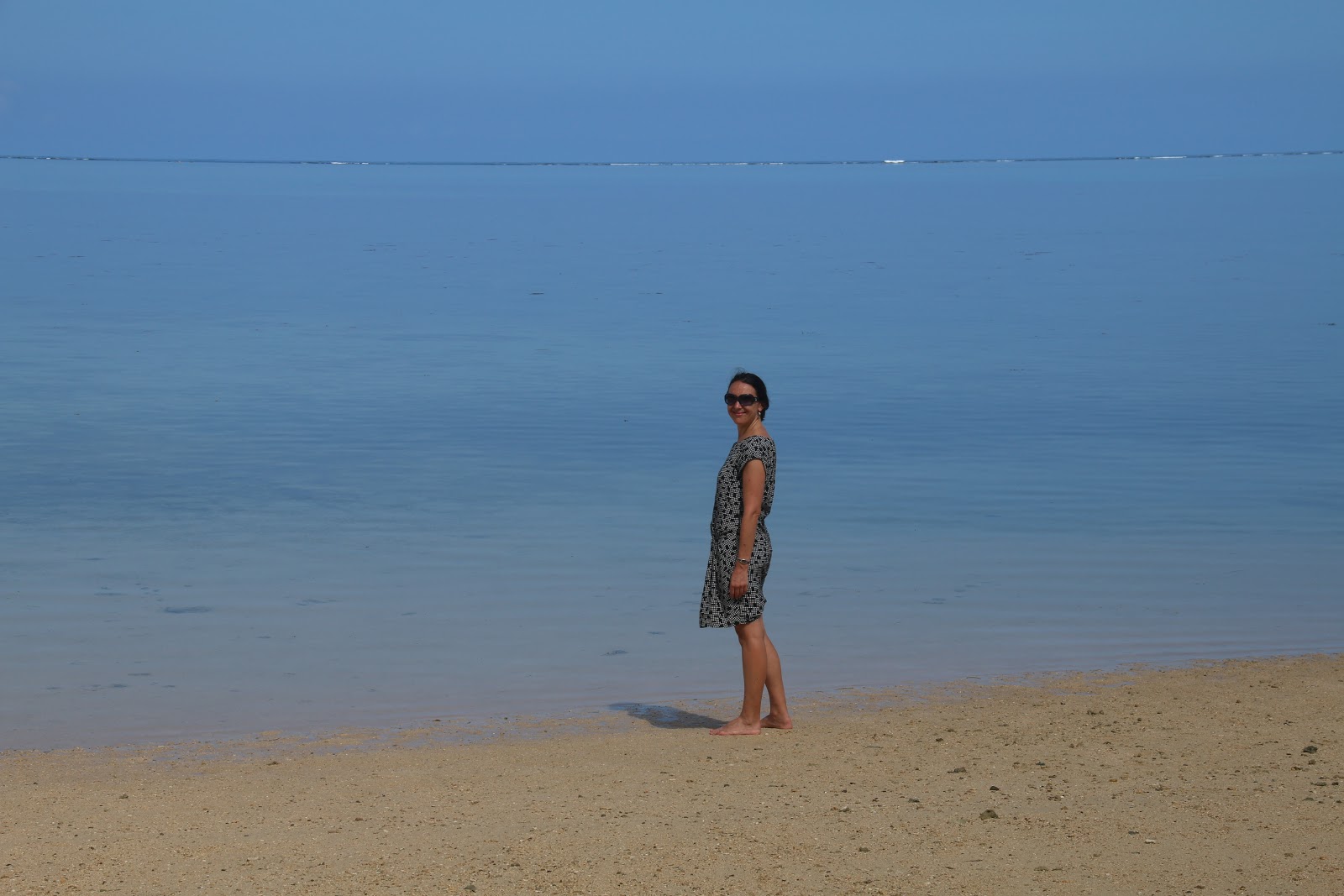
I actually haven't been to a beach yet during our Okinawan adventure (Mathilde had, during my scuba diving), so we decided to head down to a beach on the western side of the island. It's definitely what one could call a paradise beach with great sand, an emerald coloured sea, and not a soul in sight. The only problem was that the water was too shallow for any meaningful swimming. Still, nice to soak in the warm water....


Rather than taking the boat back to Ishigaki, we headed over to nearby Taketomi-jima. The main village on the island is famous as being an example of a perfectly preserved Ryukyu village - basically almost all the houses are built in traditional Okinawan style, surrounded by walls and guarded by Shiza (lion-like statues). A nice place to have a quick walk around (although there isn't much to see as such). We also got to see the local traditional mode of transport (carts pulled by buffalos). 


For dinner, we decided to try the local beef - an Ishigaki speciality. We ended up going to what is apparently the second best place to have Ishigaki beef - and it was indeed absolutely delicious (if a wee bit expensive). 

On our last full day in Ishigaki, we decided to do a tour to an island a bit further away called Iriomote. It's the second biggest island in the Okinawan archipelago, almost completely undeveloped, with nearly 90% of the island being  covered by mangrove forests and jungle. Sounds like heaven ? 


Maybe not heaven, but not far off either. We started off with a nice boat tour along Urauchi river. It's a pretty stretch of river, to be sure, and we even saw a couple of wild pigs along the ways (it has to be said though, the river tours we did in Florida earlier this year where much more rich in terms of wildlife). After the cruise, we had about an hour to walk around - the highlight of our short hike was Kampire falls (apparently one of the "Top 100 scenic waterfalls in Japan").


Our tour bus (which was rather big, considering there was just one Japanese guy on the tour in addition to us) then took us to a wonderful beach on the Northern tip of the island. Again, the water was very shallow, so it wasn't really suitable for swimming (which was fine, since we didn't bring our swimming gear), But a great place to just wade around in the water. 


Our Iriomote tour wrapped up with a visit to Yubujima, a small island just off the eastern coast. This being a package tour, we had the honour of transferring to the island by buffalo cart (we were even treated to some local music by the driver). As the water was very shallow between the two islands, we could've waded across I reckon - but hey it was all good fun. The island is a kind of botanical garden (built by two of the islands inhabitants who stayed there after the rest of the people moved back to the mainland) - the hightlight was probably the butterfly garden. 

That, sadly, brought and end to our stay in Ishigaki - time to catch our flight back to Naha (would've loved to stay for a couple of days more). We still had a day to visit Naha, before continuing our adventure in South Korea. Upon arrival, we checked into our hotel, which turned out to be a love hotel! (or at least a former love hotel). Love hotels are another wonderful Japanese invention - a place where you basically pay by the hour, if you get the drift... But actually, love hotels are used a lot by young couples and even married couples, to get a bit of privacy...

We decided to visit Tsuboya, which is a pretty interesting neighbourhood, famous for its pottery. It's hands down the nicest area in Naha to just have a walk around. I'm not what one would call a big fan of pottery in general, but there were some pretty nice, cute little shops that we checked out.

For dinner, we decided to check out the rather unimaginatively named Food Street, just off Kokusai Dori. Basically it's a collection of restaurants serving various sorts of local food. We had an OK, if a bit pricey, meal there.

That brought an end to our 3 month-visit in Japan. Somewhat wistful, but somehow I think we will be back soon ;-). South Korea, here we come!


Sunday, October 23, 2016

Exploring Naha

Our Asian adventure continued Southward, in Okinawa - tropical Japan. We started our exploration of Okinawa at the capital, Naha, which is located on the main island. After arriving at the rather makeshift "low-cost airline terminal", we zipped down to central Naha, taking the monorail (a pretty cool way to see the city, actually).

We started our exploration of Naha by checking out the historic town of Shuri (located at the outskirts of modern Naha). The terrible battles fought in Okinawa between the Japanese and Americans unfortunately left most of Okinawa Island in ruins. This includes the old capital of Shuri, and its famous castle (which  originally dates back to the 13th century). However, the castle has since been painstakingly reconstructed, and has now pretty much been restored to its historic state (even if it does look a bit "fake").

Anyway, Shuri castle was the administrative centre of the Ryukyu kingdom, until it was taken over by the Japanese and Okinawa became a Japanese prefecture in 1879. It's a very nice place to visit. The location, on top of a hill, is very scenic indeed, and affords nice views over Naha. The castle itself is pretty interesting to visit too, there is plenty of information about the history of the castle and the Ryukyu kingdom. (I found the kingdom's often complex relationship and status relative to Japan and China quite interesting)

After a nice lunch at the castle site cafeteria (I had taco rice - a "local speciality" rather heavily inspired by the texmex food brought to Okinawa by the American GI's, still a strong presence on the island). We then headed off to check out another historic Shuri site, the Tamaudun mausoleum. This is basically the site where the Ryukyu kingdom royal family members were buried. Unfortunately, the tombs can only be seen from the outside. There is a small museum next to the tombs, but since there are hardly any explanations in English, the visit was of limited interest.

They'd also told us about a historic stone path way at the tourist information back in Naha, that we decided to check out too. A bit of a disappointment too, as it really is just a stone path. We were expecting some historic houses to line up the stone path, but most of the houses were pretty modern.

On the way back to the monorail station we stopped by at an Awamori distellery. Now THAT was more interesting. Awamori is the local Okinawa alcoholic beverage of choice (well, their Orion beer does seem to be more popular, to be honest...) - it's a rice liquor distilled from Indica rice (which is apparently pretty much all imported from Thailand...). Anyways, we were treated to a nice multimedia show explaining the distillation process, we got to see the distillery itself, and most importantly of course we got to try out the stuff itself. Kampai!

The next day, we decided to check out a very different site, The Former Japanese Navy Underground Headquarters. Like I mentioned before, Okinawa suffered greatly during World War II, and this place hammers than point home very well. It's in this place (a network of underground tunnels and bunkers) where the Japanese made their last stand against the far more numerous and better equipped American troops. The final telegram from the commander (who naturally commited Seppuko) to the Japanese high command, where he commends the bravery of the Okinawan people, is rather touching. One of those places you just have to visit (even if it can be an uncomfortable experience), a great antidote to the folly of war...

For lunch, we made our way back to Naha, to Kokusai Dori (international street - the main touristy drag in Naha, with loads of restaurants, bars and souvenir shops). We ended up in a rather touristy place serving up local specialities, but all in rather good taste (both as far as the food and the place itself is concerned). 

We spent a bit of time wandering around Kokusai Dori - mostly we actually went to the souvenir shops and tried the food samples they had - Okinawan sweets are actually rather good compared to what you often find on the other Japanese islands (I love Japanese food, but deserts/sweets are not their strong point in my opinion).

We then jumped on the monorail, and headed down to visit the Okinawa Prefectural Museum. Before checking out the museum itself, we headed off to a nearby park, where some kind of local festival was taking place. The festivities involved local dance performances - all good fun! Some karateka were preparing to put on a show (Karate actually originates in Okinawa) - but unfortunately we had to head off to the museum before we cold check out the performance (as it was getting pretty late).

The museum was very interesting indeed, with plenty of interesting historical information and interesting exhibits. Unfortunately, we had to rush through it all a bit, since we arrived just about 1 hour before the place closed). 

The next day, it was time for us to leave Naha and fly on to nearby Ishigaki island, but we had a bit of time on our hands before heading off to the airport. We decided to use that time to check out Fukushu-En - a Chinese garden located not too far from our hotel. The presence of the garden is a testimony to the strong ties Okinawa has to mainland China (historically and still to this day - the garden was actually opened in 1992 in celebration to Okinawa's appointment as sister city to Fuzhou). It's an interesting place to visit, as there aren't a lot of Chinese gardens in Japan (this is the only one I've visited). It's interesting that Japanese and Chinese gardens are actually very different (interesting since Japanese culture of course very heavily borrowed from Chinese culture up until a few hundred years ago). I have to say I prefer Japanese ones.

Anyway, that brought an end to our exploration of Naha, as it was time to head off to the aiport.

Thursday, October 20, 2016

Last days in Tokyo

So we still had a few days in Tokyo, before it was time to head south, to Okinawa. We naturally wanted to make the most of our last few days in this wonderful city... Especially as we had a bit of time, since we no longer had any Japanese classes to attend. 

On Monday, we decided to explore Omotesando, which is one of the trendiest areas of Tokyo (which is to say it's very hip indeed!). Omotesando is a shopping boulevard, Tokyo's answer to the Champs Elysees, if you will. Omotesando itself is a wee bit our of our price range (although one of the best souvenir shops in Tokyo, Oriental Bazaar, is located there), but the streets off Omotesando are full of quirky little shops, and full of interesting characters. 

We even found a shrine (dedicated to the famous naval admiral Toho, after his death), and a peaceful garden in the middle of all the hustle and bustle. After walking down famous Cat Street (one of the more famous shopping streets), we eventually found ourselves in Shibuya. Before heading back to Kitasenju, we decided to check out one of the shopping malls near the train station, which has a nice panoramic view platform on the 8th floor, from which we were treated to quite a nice view of the famous Shibuya pedestrian crossing (you know, the one made famous by the movie "Lost in Translation"), for example.

The next day, we decided to do something entirely different. The plan was to head down to Asakusa, and ride down the Sumida river by boat to Hama Rikyu garden. On the way to Asakusa train station, we dropped by beautiful Sensoji temple, my favorite temple in Tokyo. We were lucky enough to catch the golden dragon dance, when we were there. The spectacle, which involves a troupe of dancers carrying a long paper dragon through the crowds, was rather impressive!

The river cruise wasn't all that interesting. Strangely enough, the riverbanks of Tokyo aren't all that interesting (architecturally or otherwise). Still, it was a nicer way to get to the gardens than taking the metro! 

The Hama Rikyu gardens, on the other hand, were very nice indeed. The gardens have a long and varied history (it was used as a duck hunting ground, as an imperial garden/resting place, until it was opened up to the public). The highlight of the place is a nice little pond, with a beautiful tea-house located in the middle of it. The tea-house was used by the emperor to welcome and entertain guests in olden days. I would say the place ranks as one of the absolutely most beautiful spots in Tokyo.

After checking out the garden, we had a walk around the nearby Shiodome district, which is very different indeed from the gardens. Shiodome is a relatively recently developed (it was opened up in 2002) skyscraper district, which now houses offices, museums, apartments, restaurants, and plenty of entertainment options. It's pretty different from the other, older districts of Tokyo, an interesting place to wander about. We even ran into a TV shoot by accident (involving a rather kawaii yellow/red/white character).

We finished off a rather busy day in fancy Ginza, which is of course one of the premier shopping districts of Tokyo. After a coffee break, we finished in Dover Street Market, a ridiculously trendy collection of shops. 

On Wednesday, we decided to check out Ueno zoo. Not the sort of thing we normally visit (not sure watching animals stuck in too-small cages is my thing, really...), but we decided to give it a go anyway. And it was kind of good fun, actually. The main draw of the zoo are the two pandas, that were graciously donated to Japan by the Chinese government. And they are pretty interesting animals, for sure, somehow majestic and cute at the same time. 

Apart from the pandas, we enjoyed the gorillas and other monkeys, which are always very entertaining. We were also very impressed by the polar bear swimming under fake icebergs (not sure it's very reasonably to keep polar beers in a rather hot country like Japan, though...). All in all, a pretty cool experience, then!

Thursday, then, was our last day. We didn't really have a lot of time to do sightseeing, since we had our bags to pack, and the flight was in the early afternoon. We did have one last walk around Kitasenju, a part of Tokyo we've grown to really like, and which we'll miss for sure. And of course, we had to have a last lunch with our good friend Matsuoka, who's helped us a lot in getting adjusted into life in Japan. He took us, as always, to an excellent restaurant serving fish. Oishikatta desu!

We will very much miss Tokyo, but we will be back in the not-too distant future, that's for sure! So it's "jaa mata" rather than "sayonara"! 


Sunday, October 16, 2016

Last weekend in "Mainland Japan"

So, or stay at Tokyo is coming to an end - our last weekend in the capital was upon us. It also meant the end of our Japanese courses at Coto Language academy, something we were feeling a bit wistful about. We'd spent a great few weeks here, met a lot of cool people, and even picked up a bit of Japanese (I should hope so!), although we are still far off from being able to have a proper conversation in Japanese.

One of our class mates, "Are san" (a Mexican lady called something like Alexandra, I suppose?) was kind enough to invite us to a party at her apartment in Akasaka, an invitation we were more than happy to accept. Akasaka is a part of Tokyo we don't really know, and we had a bit of time to kill before the party started, so we decided to walk around a bit before joining the party. Akasaka is not a very touristy part of town - it's more of a fancy residential area, and there are also a fair few governmental buildings there. It was one of the first areas of Tokyo to receive a face-lift after World War II. It used to be one of the raciest places in Tokyo to go out (Akasaka was dethroned by Roppingi in the 80's, and Shinjuku I suppose has since taken over from Roppongi). It's a pretty interesting area to explore, with a lot of fancy buildings, fancy restaurants and even a shrine we quickly had a look at.

The party itself was great fun! Are-san is going out with a Canadian guy, who must be rather well-paid, as their apartment is absolutely HUGE! (Akasaka isn't exactly the cheapest area in town, either). The guests were an interesting mix of expats, Coto Academy Language students, and Japanese people (most of whom spoke Spanish!). The end of the evening was pretty funny, as South Americans and Japanese people were discussing in Spanish. Anyway, we had a great time! Felt a bit like a Coto Academy leaving do in some ways!

The next day, we decided to head off to Yokohama, as we'd enjoyed our first visit, and felt we hadn't explore it all. We started by having a quick walk around the Chinatown area, and the nearby Yamashita park, beautiful, as it was basking in sunshine. There was some kind of Indian festival taking place in the park, which was pretty cool. We stayed around for a while, checking out some traditional dances. I have notice there are quite a few Indians in Japan, many working in the IT sector I suppose, but also a fair few working in restaurants and shops.

We then headed off to nearby Yamate. Yamate, also known as "The Bluff" (since the neighborhood is located on a hill), is where Western people moved in after Yokohama was opened up to foreigners during the 2nd half of the 19th century (the Chinese people migrated to nearby Chinatown). Unfortunately, most of the houses were destroyed (like most of Yokohama) during the Great Kanto earthquake in 1923, so few buildings on the Bluff predate this cataclysmic event. But, we were able to visit a few of those. All in all, it's a very pleasant area to have a stroll around... We were even treated to the magnificent sight of mount Fuji, during sunset. Beautiful.

On Sunday, the weather forecast was very positive. One of the things we had wanted to do during this trip, but were unable to in the end, was scale Mount Fuji. The Mount Fuji climbing season was already over, but thankfully there are loads of mountains in Japan, which can be climbed all year around. So on this particular day, we decided to tackle Mount Tsukuba, together with our good friend Matusoka, who was kind enough to drive us to Tsukuba.

Before the climb, we checked out the beautiful shrine located at the bottom of the mountain (mountains are important holy places in Japanese Shinto religion, mountains are typically inhabited by powerful spirits (Kama), due to the fact that the mountains are "closest to heaven". Anyway, the religious bit done, we started the ascent (636 meters of ascent in total, the summit is at an altitude of 870 meters).

It was actually pretty hard going, as the path is pretty steep. Thankfully, we were caught up in a big of a traffic jam on the way up, which gave us plenty of excuses to catch our breath ;) Seriously speaking though, hiking in Japan is not like hiking in Europe or the US. I mean, cities in Japan are crowded, but I didn't realize that even mountains are crowded. Well, this one, at least, was (as is each mountain within striking distance of Tokyo, including Mount Fuji). At least there's no risk of getting lost!

There are actually two mountains at the top, the female and male mountains, both having their own shrines. The view from the female mountain was better, hence it was EVEN more crowded than the male one. We literally had to queue for 10 minutes or so to get to the main viewpoint.

The beginning of the path heading down the mountain was even more crowded than the one heading up, since it was narrower. So it was pretty slow going. I rather enjoyed the end portion of the walk, which was very pleasant, and not crowded at all. All in all, a great hike, even if I was expecting a bit fewer people up there ;) We had some delicious Tonkatsu to award our efforts... (Tsukuba is famous for their pork, and hence their Tonkatsu).

We met up for a great dinner with Matsuoka and his family in Adachi, not far from Kitasenju. Great food, as we've come to expect whenever we go for dinner with Matsuoka-san! Afterwards, we decided to walk back to our flat, taking in some rather nice night-time views of Kitasenju as we crossed Arakawa river.

What a great weekend, all in all!  

Tuesday, October 11, 2016

Kabuki time

We have a kind of bucket list for things we want to do in Japan. I've crossed off a couple (watched a sumo tournament, wielded a Katana) during this trip, but a few remain (I want to eat Fugu, climb up mount Fuji, watch a kabuki, for example). The kabuki one is easy to cross off the list, so we decided to go for it this Tuesday. Kabuki is, in case you didn't realize, dear reader, one of the two most famous types of traditional Japanese theater (No is the other one, and apparently it's more difficult than Kabuki)

So off we headed to Ginza, where the legendary Kabuki-za is located (or rather, the latest of many incarnations, this one is only a few years old, even if it looks like a historical building from the outside). We weren't really mentally (nor financially) prepared to take on a full 5-hour kabuki play, so decided to rather go for single act tickets. For this, you have to show up an hour before the play starts, and queue. Actually, we got tickets for the two first acts, in the end...

The first act was all about dancing, and only lasted about 20 minutes. But it was all very beautiful (the costumes, the music, the dancing, everything basically). The second act was proper kabuki (although apparently the play was a bit of a satirical take on a very famous kabuki play). We decided to get a "visual guide" (which basically translates all the dialog for you, and describes the action, on a tablet-like device). Which was an excellent call, as we would've been completely lost without the guide (indeed, our Japanese is certainly not up to scratch to follow a kabuki act, I'm afraid...). With the guide, it was a pretty interesting experience.

The story was basically about the first shogun of the Kamakura Shogunate, after defeating the rival clan in battle, then decides to wear the emperors dress. This shocks both his opponents, as well as the hero of the story, who challenges the future shogun. (the twist of the story is that the hero of the story is a woman, rather than a man - played by an actor specializing in female roles).

An interesting cultural experience then, one that I can warmly recommend (do go for a single act ticket though, and remember to get the translation unit!).

Sunday, October 9, 2016

A busy weekend in Tokyo

Second last weekend in Tokyo, snif... What to do. Plenty to do, so little time... Friday evening, we decided to not get too ambitious, and sort of randomly decided to go to Ikebukuro after our Japanese class.

Upon arrival, we (again, rather randomly) decided to check out Nekubukero - which is the oldest "cat petting zoo" in Tokyo. What's a cat petting zoo, you ask ? Well, something that probably only exists in Japan. It's basically a kind of "cat house" (located on the top floor of the Tokyu Hands department store), where people (usually teenage girls who don't have cats at home, I suppose) can go and, well, play with cats and watch them live in their "cat kitchen", and so forth. It's all very Japanese, and a bit weird. Oh well, one more experience to tick off the bucket list, eh ;)

The next day, we decided to get a bit more ambitious and visit Odaiba -  a part of Tokyo we've not visited yet. Odaiba is a huge entertainment and shopping district located on an artificial island, in the bay of Tokyo. Construction here started during the economic boom of the 1980's, but alas, slowed down when the bubble burst in the 90's. Since then, construction picked up again, and it's now a pretty cool part of Tokyo to visit, with things to do for everybody.

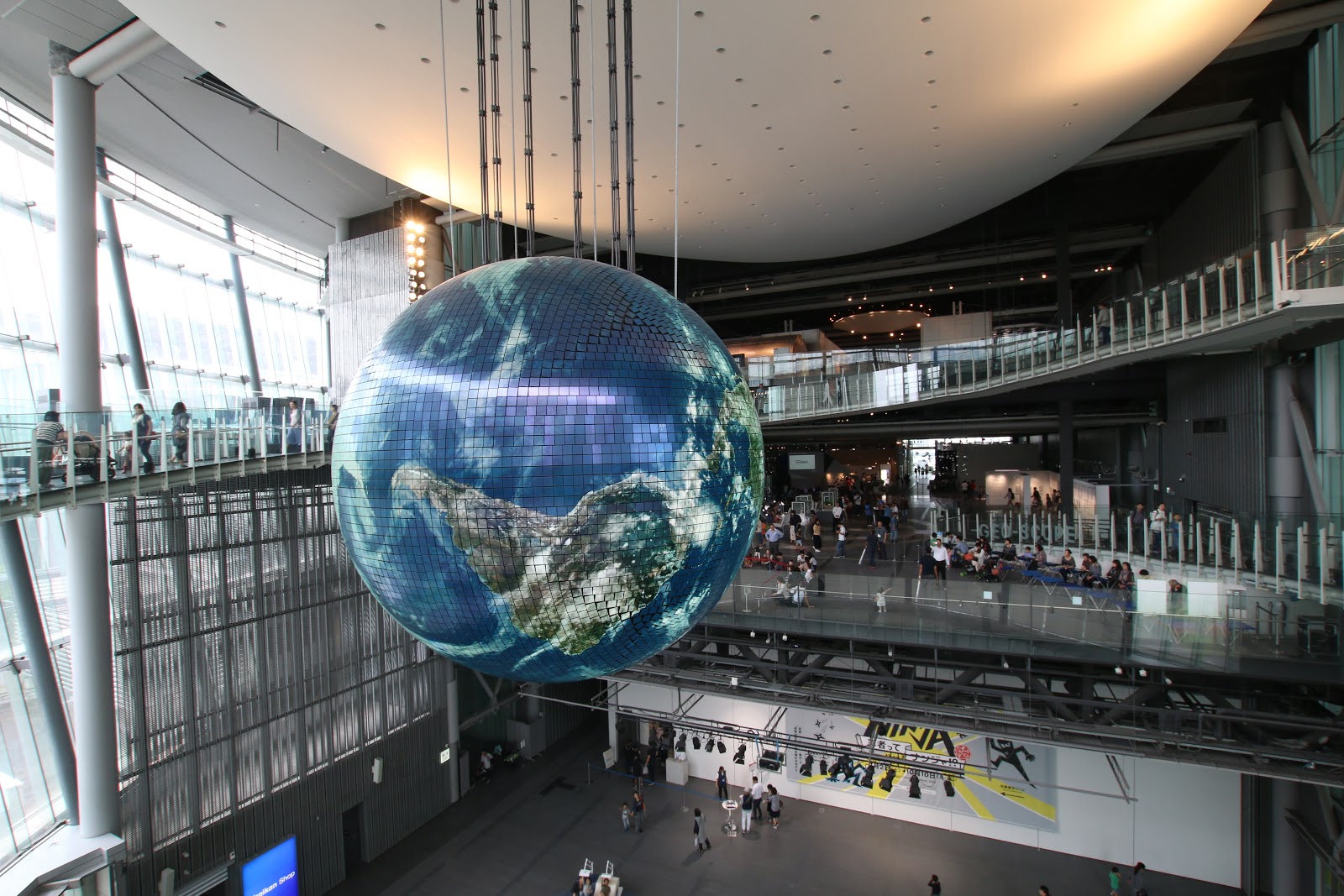
We started our exploration with the National Museum of Emerging Science (or Miraikan - which means building of future in Japanese). I've wanted to check out this place for a while... The main draw of the place is probably their robots, they have quite a few on display, some of which one can actually interact with. Mathilde had a rather surreal (and one-sided, with the 'bots doing most of the talking) discussion with three robots about the future of healthcare...

The main draw of the museum is no doubt the Asimo humanoid robot. The white plastic chap was indeed rather impressive, walking around the scene in front of everybody, walking forward, backwards, side ways, waving his hands, and even kicking a ball. The movement was, for sure, smooth and almost human-like. But, there is no interaction as such, so I think we are quite some time from having "thinking robots" yet (fortunately!?)

Apart from that, the museum was a bit disappointing, actually. There wasn't all that much informative displays about other technology that will impact our future - this being a museum in Tokyo, Japan, I somehow expected more. There was a pretty coo Ninja exhibition at the bottom floor, though, which I really enjoyed. The architecture of the building itself is really cool though - and it definitely embodies the future, as it should do...

We then carried on to Venus Fort, a big shopping centre. On the way there, we ended up at Toyota Historic Garage (an extension of nearby Tokyo Mega Web, more about that later). It was actually a really cool place, showcasing classic cars throughout the 20th century, in a kind of fake-retro environment. There were not only Japanese cars, but also Chevys, a Mustang, a Ferrari, a Porche, just to mention a few cars... Really cool place, especially as it was free.

Venus Fort reminded us a bit of the Venetian Casino in Macau, with its fake Italian canals. As this place was a bit less-over the top than the Venetian, it was kind of less impressive. But the shops are actually places where us mortals can actually shop too... (the Venetian mostly features fashion shops like Gucci, Versace etc).

I left Mathilde in Venus Fort and headed off to briefly check out Toyota Mega Web, a pretty cool place Toyota uses to showcase their latest car models, as well as their upcoming technologies. These days it's of course all about electric/hybrid cars, improved safety (Toyota, like most car makers, seems confident they can prevent lethal accidents involving their new cars in the next 5-10 years or so...) and autonomous driving. There were plenty of cool simulators to try (unfortunately, with rather long queues, so I abstained...), and even a test track where the brave ones can try out various fancy cars.

We then made our way to the possibly fanciest shopping mall in Odaiba, DiverCity Tokyo Plaza. The coolest thing about the place is NO DOUBT the life-size Gundam robot standing guard over the place. Sugoi desu ne, as the Japanese would say. Believe it or not, we ended up in a Hello Kitty cafe for a bit of coffee & cake break. The place was just unbearably cute. Another one to tick off the bucket list, eh ? ;) I have to say though, there was a hefty price tag for all that Kawaii...

By now, it was getting dark, so it was time to find a place to eat. We had a walk around Odaiba for a bit more before that though, checking out the statue of liberty replica (not full-size, this one only stands at 12 meters), with the rainbow bridge (the bridge that connects Odaiba to the "mainland") and the Tokyo skyline completing the rather beautiful view!

For dinner, we ended up in a Hawaiian restaurant, imagine that! There are actually quite a lot of Hawaiian restaurants in Japan, as it's actually quite close to Japan, and a lot of Japanese go there on holidays. Good choice, in the end, the burgers were excellent!

The next day, we were feeling a bit less energetic, partly due to the fact that the morning was rather rainy (apparently the autumn this year has been one of the rainiest in recent history - bad luck for us!). But, nonetheless, we decided to venture out to check out Shinjuku Gyoen, a big public garden/park located in busy Shinjuku. Historically, the garden dates back to the Edo era, and it was actually used by the Imperial family for recreation and for entertaining guests during the early 20th century. It was completely destroyed during World War II, but was rebuilt afterwards as a public park.

It's a very nice place indeed, and gives nice respite from the hustle and bustle of Shinjuku (one of the busiest neighborhoods in Tokyo). It's not my favorite garden in Tokyo, I prefer for example Koishikawa Korakuen. Shinjuku Gyoen is more of a public park than a traditional Japanese garden, actually, although part of the park is landscaped in typical Japanese fashion. There is also an English garden (basically a lawn!) and a French garden. The highlight, though, is a beautiful Taiwanese pavilion.

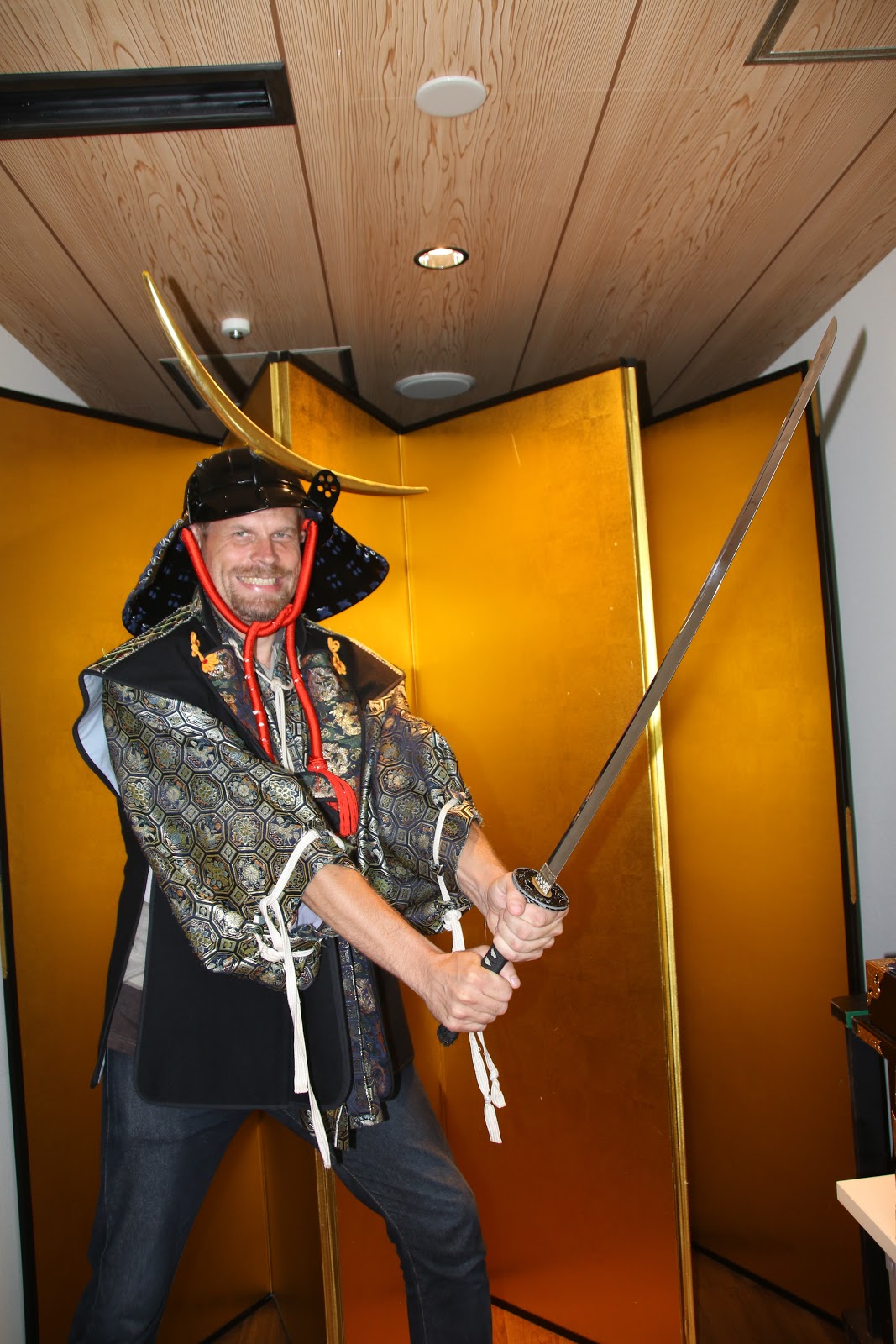
After a rather expensive "cake and coffee break" in a cafe, we headed into Shinjuku, Mathilde to do a bit of shopping, and me to visit a museum. And not just any museum either - the samurai museum! It was a great little museum, featuring beautiful samurai armor and weaponry. A very knowledgeable young chap, who also spoke excellent English, took us around the place, explaining about the history of samurais in great detail. The cool bit was of course when we got to try on the armor and a katana (not a real one, though!)

Before heading back to Kitasenju, I had a quick peek at the famous Golden Gai area, which was on the way to the metro station from the museum. The Golden Gai is a small area of winding alleys, full of small bars and restaurants, where the salarymen come and "destress" after a hard day at the office. Most of the bars are tiny, most accommodating less than 10 people. For sure a place to explore night-time one of these days!